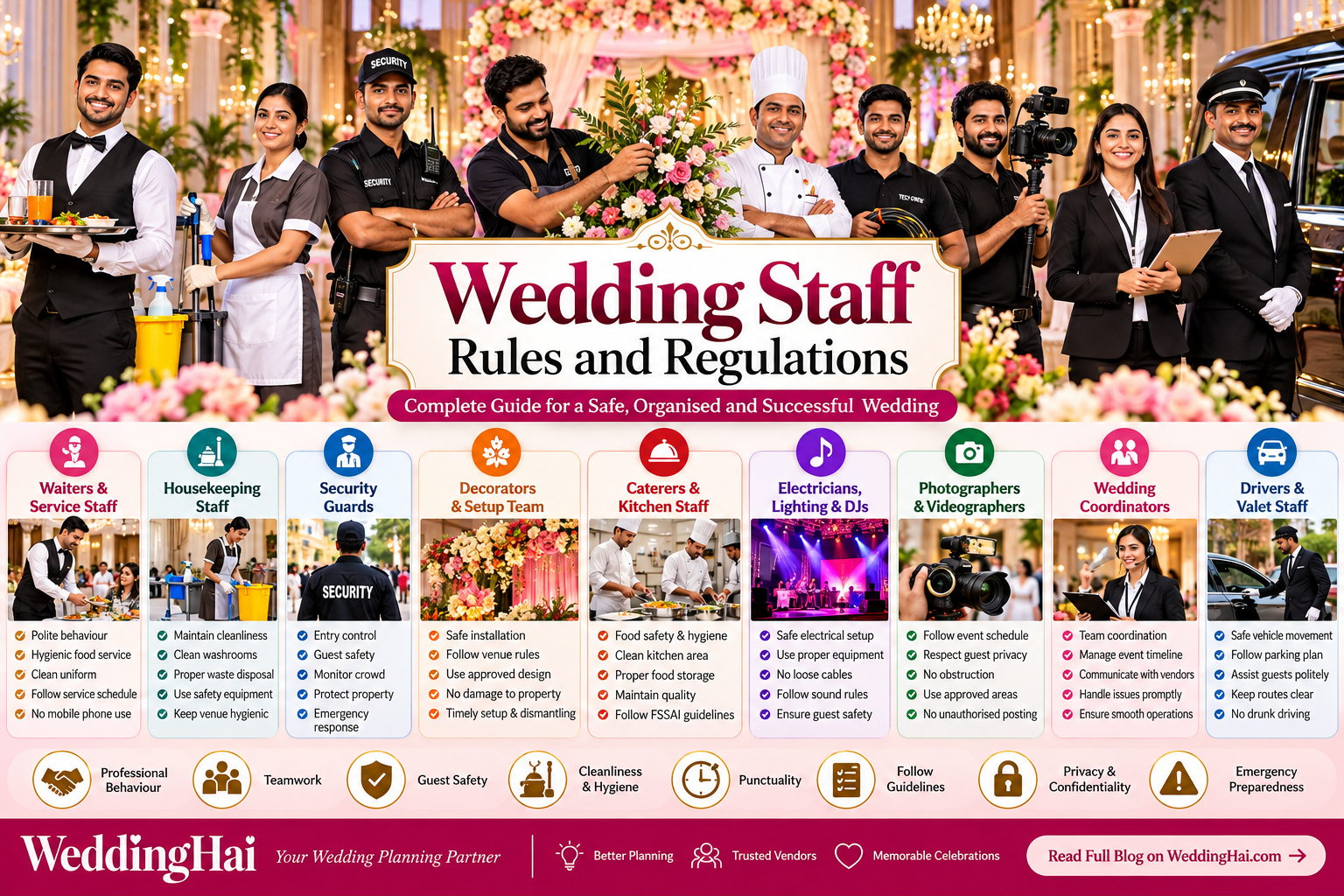
Wedding Management: The Complete Guide to Planning a Perfect Wedding in India
Planning a wedding is one of the most exciting experiences in life, but managing every detail can be challenging. From selecting the wedding venue and booking caterers to arranging decorations, photography, entertainment, and guest accommodation, a wedding involves multiple services that must work together perfectly.
This is where professional wedding management services can make a difference. A well-organised wedding plan helps couples and families save time, manage their budget, coordinate vendors, and enjoy their special celebrations with less stress.
At WeddingHai.com, couples can explore wedding services, discover vendors, and find inspiration to plan their dream wedding.
What Is Wedding Management?
Wedding management is the process of planning, organising, coordinating, and supervising all the activities involved in a wedding celebration.
It includes everything from initial planning and budget preparation to vendor booking, event scheduling, guest management, and execution on the wedding day.
A wedding management team helps ensure that different services work according to a planned schedule, reducing confusion and improving the overall experience for the couple and their families.
Professional wedding management can be useful for intimate family functions, traditional Indian weddings, luxury weddings, destination weddings, and large multi-day celebrations.
Why Is Wedding Management Important?
Indian weddings often include several ceremonies, multiple venues, numerous vendors, and large guest lists. Without proper coordination, even small delays can affect the entire event.
Here are some important benefits of wedding management.
1. Better Wedding Budget Management
A wedding budget can quickly increase when expenses are not tracked properly. Wedding management helps couples plan expenses and allocate funds to the most important services.
A wedding budget may include:
-
Wedding venue and banquet hall
-
Catering and beverages
-
Wedding decoration and floral arrangements
-
Photography and videography
-
Bridal makeup and hairstyling
-
Wedding outfits and jewellery
-
Entertainment, DJ, and live music
-
Guest transportation and accommodation
-
Invitations and wedding stationery
-
Emergency and miscellaneous expenses
Tip: Keep a separate contingency budget for unexpected expenses, and confirm all vendor charges in writing.
2. Finding the Right Wedding Vendors
Choosing reliable vendors is one of the most important parts of wedding planning. Every service provider should meet your requirements, budget, quality expectations, and event schedule.
Depending on your wedding needs, you may require:
-
Wedding planners and coordinators
-
Wedding venues and hotels
-
Wedding decorators and florists
-
Catering companies
-
Wedding photographers and videographers
-
Makeup artists and hairstylists
-
Bridal and groom fashion specialists
-
DJs, musicians, and entertainment artists
-
Transportation and accommodation providers
WeddingHai.com helps couples explore wedding service categories and discover vendors for their celebrations.
Before booking any vendor, review their portfolio, discuss availability, compare quotations, and understand the payment and cancellation terms.
3. Wedding Timeline and Event Coordination
A detailed wedding schedule helps keep every ceremony organised.
For example, a traditional Indian wedding may include the following functions:
-
Engagement ceremony
-
Mehndi ceremony
-
Haldi ceremony
-
Sangeet night
-
Wedding rituals and pheras
-
Jaimala ceremony
-
Reception
Each event requires different arrangements, including venue setup, catering, photography, guest arrival, and entertainment.
A wedding coordinator can prepare a schedule, communicate with vendors, and help ensure that important activities happen at the right time.
4. Stress-Free Wedding Day Management
On the wedding day, families should be able to enjoy the celebration instead of continuously checking arrangements.
A wedding management team can coordinate venue readiness, vendor arrival, decoration setup, guest assistance, ceremony timing, and last-minute requirements.
It is helpful to appoint a clear point of contact for vendors so that the couple and their families are not required to resolve every operational issue themselves.
Step-by-Step Wedding Management Process
Follow this practical process to plan and manage a wedding successfully.
Step 1: Define Your Wedding Vision
Start by discussing the type of wedding you want. Decide whether you prefer a traditional wedding, a modern celebration, a luxury wedding, an intimate function, or a destination wedding.
Consider the guest count, preferred city, wedding dates, cultural traditions, and overall theme.
Step 2: Set a Realistic Budget
Prepare an estimated budget before making major bookings.
Divide the budget into categories such as venue, catering, decoration, photography, outfits, entertainment, and accommodation.
Track the estimated cost, final quotation, amount paid, and outstanding balance for each vendor.
Step 3: Finalise the Wedding Venue
The venue influences several other decisions, including guest capacity, decoration requirements, catering arrangements, and transportation.
When choosing a wedding venue, consider:
-
Guest capacity and seating arrangements
-
Location and accessibility
-
Parking and accommodation
-
Indoor or outdoor facilities
-
Catering policies
-
Decoration restrictions
-
Backup arrangements for outdoor functions
Book the venue after checking availability and reviewing the agreement.
Step 4: Shortlist and Book Wedding Vendors
Make a list of required services and shortlist vendors based on your needs.
Compare their services, pricing, work samples, reviews, and availability. Confirm the agreed scope of work and payment schedule before paying an advance.
Step 5: Plan Wedding Decoration and Theme
Wedding decoration creates the visual identity of your celebration.
Popular ideas include floral mandaps, luxury wedding stages, pastel floral backdrops, traditional marigold decorations, elegant entrance arches, and personalised reception setups.
Share reference images with your decorator and confirm which elements are included in the quotation.
Step 6: Organise Guests and Invitations
Guest management becomes especially important when multiple ceremonies or out-of-town guests are involved.
Prepare a guest list, send invitations on time, track RSVPs, and arrange accommodation or transport where required.
For larger weddings, assign family members or coordinators to assist guests with directions and event schedules.
Step 7: Create a Wedding-Day Checklist
Prepare a checklist covering vendor arrival times, decoration completion, sound checks, catering readiness, photography schedules, ceremony items, and guest assistance.
Keep important vendor contact details accessible and establish a backup plan for delays or unexpected changes.
Step 8: Review and Coordinate the Event
Before each function, confirm that the venue, decoration, catering, entertainment, and other required services are ready.
After the wedding, check outstanding vendor payments, settle agreed invoices, and collect photographs, videos, and other deliverables according to the contracts.
Wedding Management vs Wedding Planning
Wedding planning and wedding management are closely connected, but their main focus can differ.
| Wedding planning | Wedding management |
|---|---|
| Focuses on the overall concept and preparation | Focuses on coordination and execution |
| Helps select venues and vendors | Coordinates booked vendors and services |
| Develops budgets, themes, and timelines | Tracks schedules and operational readiness |
| Can begin months before the wedding | Becomes especially important as events approach |
| Suppo |